
My AI search engine tells me:
“Stephen King did not establish his career by winning public writing contests, and there is no official record or tally of him winning competitive writing contests as an adult.”
Would you be surprised to learn that neither did J. K. Rowling? Though AI tells me:
“Once published, her work went on to receive extensive critical acclaim.”
Can you guess how many other best-selling authors never won a writing contest? To repurpose an old Tony Blauer quote:
“There are more successful authors who have never won a writing contest than writing contest winners who went on to become successful authors.”
And there’s good reason for that, too. The explanation comes from Nassim Taleb’s book Skin in the Game, chapter 10. As summarized by AI:
“Taleb argues that when individuals or businesses lose an organic connection to the end experience (their “skin in the game”), they stop optimizing for actual customer pleasure. Instead, they focus on constructed preferences dictated by outside “experts,” reviewers, and peers, effectively chasing peer-vetted industry prestige rather than real utility or enjoyment.
He famously illustrates this concept using the restaurant industry:
The Fallacy: High-end, Michelin-starred restaurants often stop trying to make food that tastes good to a normal customer.
The Reality: Instead, they design complicated, pretentious dishes aimed entirely at impressing other chefs and food critics to gain industry status.The Contrast: He contrasts this with a local, family-owned trattoria that survives purely because the food yields genuine pleasure to the people eating it.”
This is exactly what writing contests are all about: impressing other writers, editors, and literary critics. And while these individuals may represent the highest, most refined literary sensibilities, they do not represent the general population.
It may possibly be true that the contest winners whose work they publish are geniuses, but rarely have I appreciated the winning story. I’ve read many award-winning books. Once. Usually, I pass them on to others when I am done with them. Not a single one of the cherished, dog-eared paperbacks on my bookshelf has ever been shortlisted for an award. Because they were written to entertain, not to impress.
The same is likely true of your favourite movies and favourite music. With few exceptions, the award winners are works only the critics understand and admire. We, the unwashed masses, prefer our lowbrow entertainment.
Taleb talks about the frustration of dining at a five-star gastronomic restaurant with five-star prices and insubstantial serving sizes that leave him perplexed and unsatisfied when he would have been happier with a good burger or quality pizza.
That’s how most of us feel about the stories we read. Was Tolkien a masterful writer? Not really. I have read and reread his books. The first hundred pages are like watching paint dry. But the world he built captures the imagination and draws me back into his pages time and again.
To win a writing contest, you must write to impress the experts, and they are a hard lot to impress. Kudos to you if you accomplish it, but personally, I want to write stories that people enjoy reading.
I’ve entered several writing contests this year because the writing prompts, word counts, and deadlines have provided an external structure to my writing practice. I have enjoyed the practice of it as I develop my writing muscles. I have not won, or even made the shortlist on most of these. The stories I submitted were fun to write and fun to read. Filled with humour.
The winning stories may be literary masterpieces for all I know, but I was unable to finish most of them because they were too dull. And the few I did finish, left me sitting there wondering what the point was. There was no payoff. No message. No satisfying resolution. Because those are the kinds of tired story tropes that literary sophisticates deplore.
Losing a writing competition does not mean you will be the next Agatha Christie, but it probably positions you closer to your intended audience than the winning selection.
Taleb likes to point out that in the restaurant business, the surest sign that a restaurant is about to go under is that it has won a prestigious culinary award, as this indicates it has optimized for critical acclaim rather than customer satisfaction.
In like manner, writing to impress the critics is a sure way to alienate the reading public.
There is a distinction here that likely explains the crux of the problem. We use the designation “writer” to describe two distinct skill sets. One is wordcraft best exemplified by poetry (how many best-selling poets do you know?) It is the skill of weaving words into art. The other skill is storytelling. There are a few writers – Amor Towles comes to mind – who combine both skills masterfully. But most of us lean into one over the other.
Stephen King’s books don’t win awards or critical acclaim because he recognizes that he is firmly in the storytelling business. He doesn’t try to impress the reader with artistic flourishes or profound symbolism. He uses relatable, everyday language to engage his readers, the kind of vernacular sure to turn off the critics. Do his stories suffer for it? Not in the least. And neither does his bank account.
There is nothing wrong with entering writing contests. Any opportunity to practice the craft is great. It may, however, be a mistake to strive to win them. Writing to win contests might improve your craft while taking you away from your readers.
Here’s a list of a few Oscar-winning movies: The King’s Speech, The Artist, Argo, Spotlight, Moonlight. Here are the top-grossing movies from the same era: Avengers: Endgame, Star Wars: Episode VII – The Force Awakens, Avengers: Infinity War, Jurassic World, The Lion King. I’m not going to pretend that the top-grossing films are better. Not even close. Or probably not. I’m not sure because the only award winner on the list that I watched was The Artist. It was okay.
But don’t despair, there exists a happy medium between award winners that no one wants to watch and big box office crap. From the era above, we also got some films that I enjoy watching and rewatching, such as What We Do in the Shadows,Nice Guys, Bridesmaids, Booksmart, and Once Upon a Time in Hollywood.
I’m not saying that I won’t enter more writing contests. I’m just not convinced that winning them is the best outcome. I don’t write to win; I write to entertain.
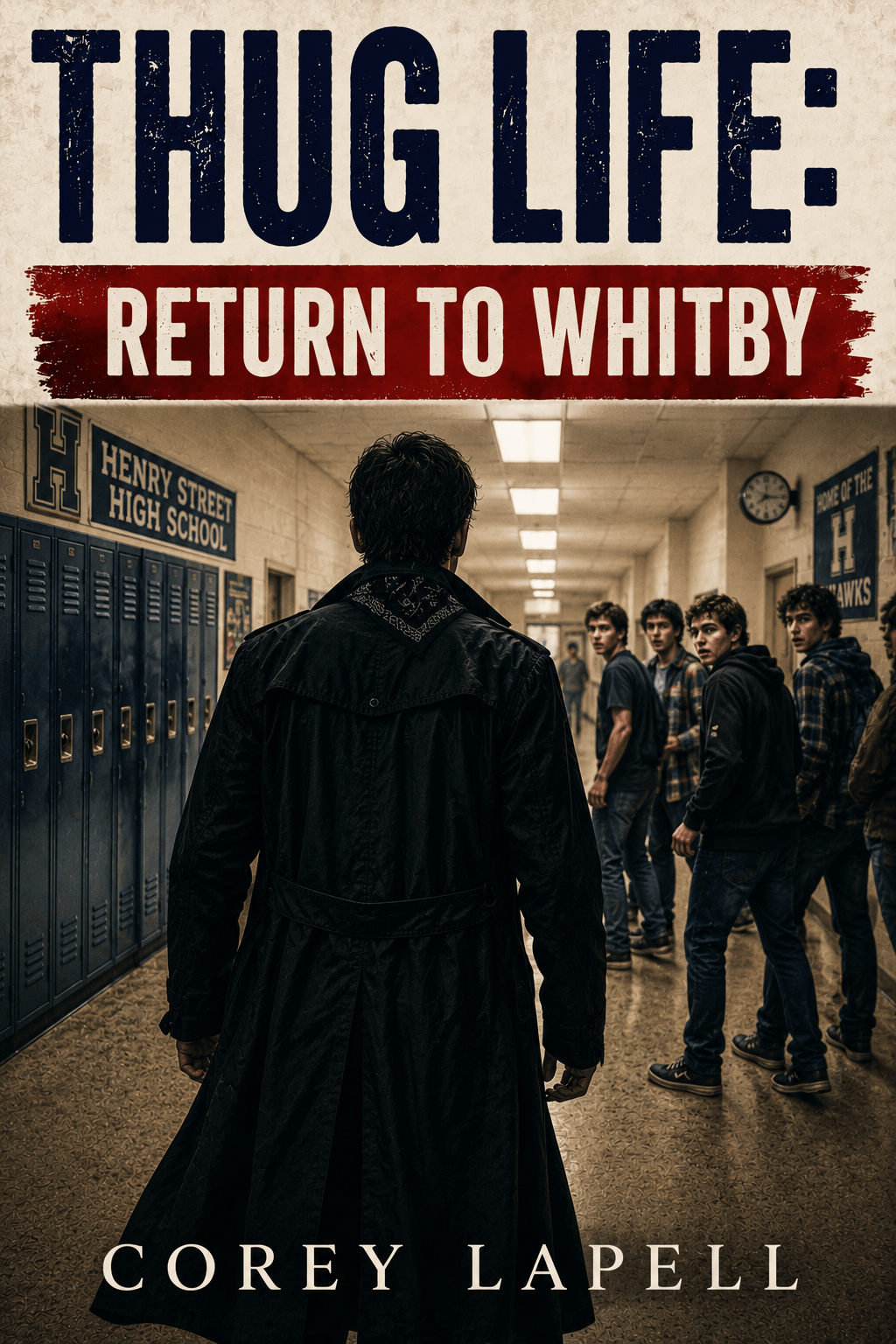
This week’s Substack, the last Thug Life installment from my hyperbolic memoirs My Life and Other Exaggerations: https://brainsoupfic.substack.com/p/thug-life-48a