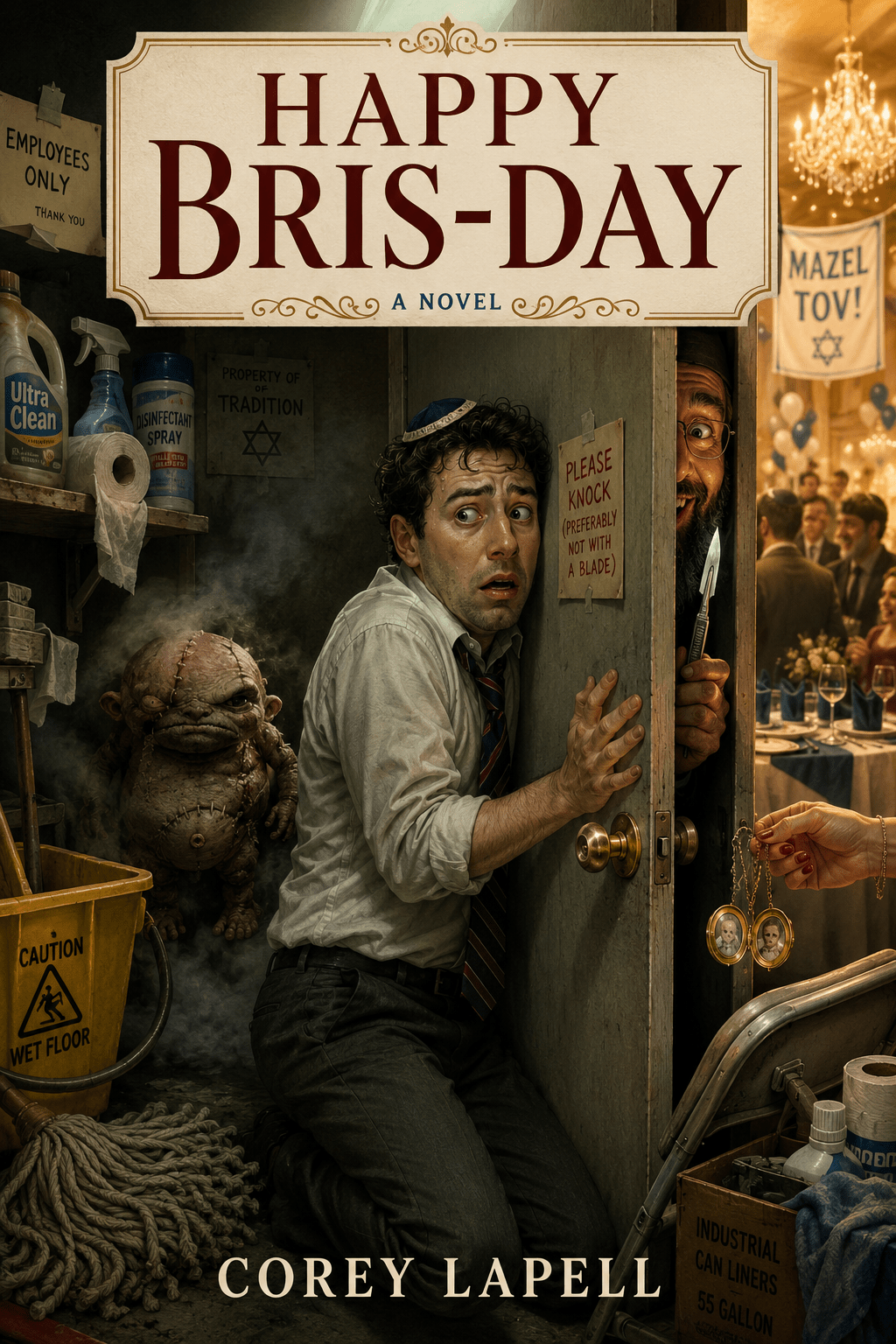
Archimedes said that with a large enough lever, he could move the world. And that’s exactly what I’m trying to do. AI may be the greatest lever a writer ever had. A force multiplier.
While folks debate the pros and cons of large language models, I am busy using the tool God provided to carve a me-shaped dent in the universe.
The good or evil is not in the tool, but rather in how you use it.
In previous generations, the world of speculative fiction writing was guarded by gatekeepers whose economic realities created an inevitable bottleneck resulting in a few celebrity authors receiving much of the market share while the vast majority never saw a word they wrote in print, destined to pursue their hopeless dreams in anonymous obscurity. Millions of brilliant creations died unread with their writers.
The internet has broken open that market. Thanks to ebooks and the rise of platforms like Amazon Kindle, every writer has the opportunity to share their words with the world. Their work need not vanish into the grave with its maker. Today’s technology has created a long-tail opportunity for unheralded writers, and some have managed to reach celebrity status independent of the machinery of traditional publishing. It is a golden era for creative writers.
But it does not come without challenges. Writers geared more toward creative work than technical expertise can be intimidated and overwhelmed by the demands of digital self publishing. And even for those who figure out how to use the platforms available to them, learning how to market stories in order to find readers is harder than ever due to the digital creative boom.
This is where AI comes in. AI is the perfect co-pilot for navigating the steps of book preparation and distribution that lie beyond my comfort zone. Distribution strategy, layout, cover design, KDP categories, search words, website construction, reading contracts, copywriting, KFP conversions; there are so many steps outside my zone of competency.
AI has proven itself a reliable assistant, coach, and guide as we build a publishing process, a brand presence, and a creative publishing machine bigger than any one writer a generation ago could have dreamed of.
Once upon a time, you would need to choose: be a writer whose creative work was owned by a publisher, or be a publisher who managed the creator’s IP. There was not enough time in the day to do both. They required different skill sets. AI has returned power to the creators, giving us the option to control our own destiny. It offers us the opportunity to bring our fully owned IP to market without compromising or selling out (unless we wish to).
This is the greatest gift to writers since the printing press, before which the career of author was not even a choice. Well, the internet has now made authorship a career available to all. And AI is an amplifying tool that, when wedded to the internet, offers emerging writers the power to see their words read broadly.
Naturally, not everyone is excited by this. Traditional publishers, whose market dominance is challenged by the growing long tail market of small press independent publishers and self-published authors, are struggling. The capital constraints that used to serve as protective bastions have now become anchors that slow their ability to adapt to the shifting markets.
Traditionally published authors may not be fans either. And why should they be? These hard-working, long-suffering, lucky few laboured through the dark ages of creative writing against impossible odds before finally breaking in. And in their success, they signed away rights to their profits and ownership of their IP, receiving pennies on the dollar from the publishers who bought those rights. Do you expect them now to be pleased to see self-published writers doing an end run around the traditional publishing establishment enjoying as much as seventy percent of profits? Even a modestly successful ebook author might out-earn an award-winning traditionally published author with much wider distribution and name recognition just because of the profit-sharing structures.
Can you imagine how unfair that must feel?
The internet opened the field for revolution, but it is AI that is arming the revolutionary militia marching on the faltering barricades of the traditional publishing industry. That is why they have turned the full force of their media empires against AI rather than embracing it. For them, it is not a tool, but an existential threat. AI is to traditional publishing what Napster was to the music industry.
Industry executives fought back. They had to. And powerful as they were, they won some victories. But in the end, they could not stop people streaming music. When Napster fell, Steve Jobs stepped in. And since then, Spotify has followed into the breach, making music available to everyone and freeing your favorite songs from the clutches of an industry that would have held them hostage behind a hefty price tag, forcing you to pay for B-sides you had no interest in paying for that came packaged with them.
Technology is the great leveller. Gunpowder isn’t only for killing. It is also for ending the aristocracy. When every man has the means to defend himself, every man may have a vote. A man who can fight is a man who cannot be oppressed. Technology is a liberator. The only ones who do not benefit from it are those who rule through a system of oppression.
The internet means your words can now be distributed. AI can help them be read. There has never been a better time to be a creative writer. There have never been fewer barriers to pursuing your dreams. And there has never been a more powerful force multiplier for the creative writer than an AI companion.
This is my lever, and I intend to use it to move the world. Praise be to God for making this gift available in my lifetime. For handing me the means with which to pursue my calling.
Here is today’s story: https://brainsoupfic.substack.com/p/happy-bris-day?r=1vg5y9&utm_campaign=post&utm_medium=web&showWelcomeOnShare=true
The AI Lever